
Having a functional wardrobe doesn’t require an unlimited budget or an innate sense of aesthetics. The key lies in a few concrete choices: knowing which pieces to keep, how to combine them, and where to spot trends that truly suit your silhouette. This article details methods you can apply during your next encounter with your closet.
Colors and Fabrics: The Foundation of a Cohesive Outfit
Have you ever noticed that a piece of clothing makes you look great one day and washes you out the next? The difference often comes down to the color worn near your face. A simple test is to hold a white fabric, then a beige fabric, and then a navy fabric under your chin in front of a mirror, in natural light. The shade that enhances your eyes without emphasizing your features is the one to prioritize for your tops, scarves, and collars.
Once this palette is identified, limit yourself to three or four base colors for your everyday clothing. The idea is not to banish creativity but to create a foundation where each piece easily pairs with the others. A wardrobe built around compatible shades reduces the time spent each morning searching for an outfit.
When it comes to fabrics, the feel is just as important as the appearance. A pleasant fabric translates into better posture: you stand taller and adjust your clothing less throughout the day. Thick cotton, slightly wrinkled linen, or ribbed knit provide structure without stiffness. It’s better to have a piece made from dense material than a thin one that pills after three washes.
To delve deeper into these topics and discover fashion tips on Only Internet, the thematic sections allow you to explore every aspect of style throughout the seasons.
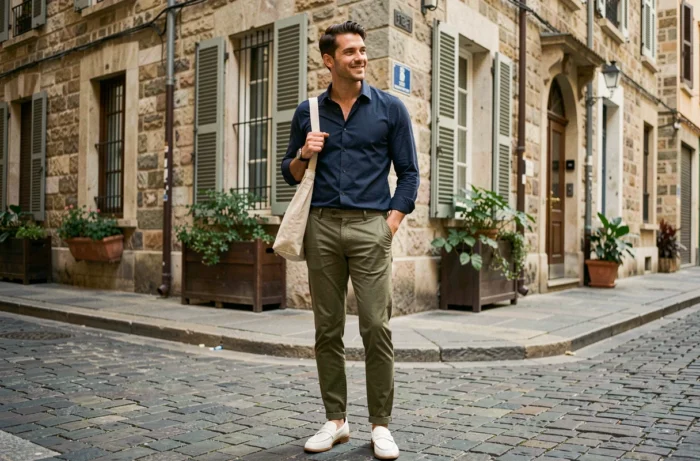
Capsule Wardrobe: Building a Functional Closet Without Accumulation
The concept of a capsule wardrobe is based on a straightforward principle: own fewer clothes, but choose them better. In practical terms, this means selecting a limited number of versatile pieces that cover all your usual situations (work, weekends, outings).
Identifying the Pieces That Really Work
Take everything out of your closet. Ask yourself a specific question for each item: how many other pieces from your wardrobe can you wear it with? If the answer is less than three, the item is too specific to be part of a capsule. A capsule piece should combine with at least three other items from your selection.
The basics that meet this criterion vary by style, but some frequently appear:
- A straight pair of pants in a neutral shade (navy, black, charcoal gray), suitable for both the office and casual outings.
- A mid-length dress in a fluid fabric, adaptable with sneakers during the day or dress shoes in the evening.
- A slightly oversized blazer that structures a look whether worn with jeans or a skirt.
- A fine-knit sweater, fitted enough to wear under a jacket without adding bulk.
Renewing Without Overloading
Add one or two pieces per season by following the trends that truly attract you, not those you see everywhere that don’t match your body type. Buying one trend per season is enough to refresh a look without turning your wardrobe into a jumble. The rest of the renewal comes from accessories: a belt, a bag, or earrings can change the look of an outfit at a much lower cost.
Fashion Trends and Textile Regulations: What’s Changing
Following trends does not mean consuming without limits. The regulatory framework around fashion is evolving rapidly and changing the available offerings in stores and online.
The European Union has prohibited since July 2026 the destruction of unsold textiles by large companies. Brands must now resell, donate, repair, or recycle their excess stock. For you, this translates into greater access to quality pieces through clearance channels, private sales, and second-hand platforms.
Meanwhile, France has adopted a specific law targeting ultra-fast fashion, with a phased implementation starting in September 2026. This legislation includes enhanced transparency obligations for sellers and penalization mechanisms. In practice, brands that renew their collections at a frantic pace will have to account for the sustainability of their products.
These developments encourage a useful reflex: check the composition and origin of a garment before purchasing it. A thoughtful purchase protects your budget and the longevity of your wardrobe. Looking at the label (material, country of manufacture, care instructions) takes a few seconds and prevents disappointments after two or three washes.
Accessories and Details: Adding Character to a Simple Outfit
A look made up of basics can seem bland without an element that catches the eye. Accessories play this role without requiring a complete wardrobe overhaul.
The choice of an accessory follows a simple rule: it contrasts with the rest of the outfit. If your outfit is understated and monochrome, a brightly colored bag or a patterned scarf is enough. If your outfit is already heavy with prints, opt for discreet accessories in solid leather or metal.
One strong accessory per outfit avoids the costume effect. Two or three standout pieces at the same time compete visually. The most shared street style photos often show a simple outfit elevated by a single distinctive element: a pair of angular sunglasses, a vintage watch, or square-toed shoes.
Shoes deserve special attention. They are the first thing many people notice (consciously or unconsciously). A well-maintained pair enhances any look, while a damaged pair drags the whole outfit down, even if the rest is impeccable. Regular polishing for leather, a brush cleaning for sneakers: these actions take a few minutes and change the overall perception of your style.
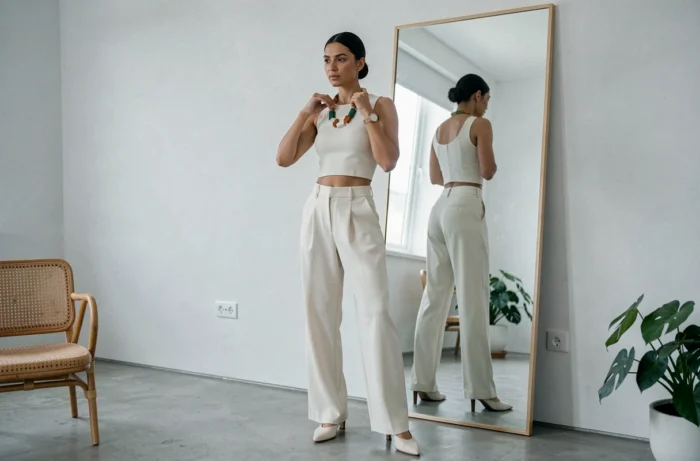
Building a personal style doesn’t come from accumulating trendy pieces but from understanding what works for you. A tested color palette, a capsule of versatile clothing, one or two well-placed accessories, and attention to fabrics: these four levers are enough to create outfits that hold up season after season.