
Article 78-2-1 of the Code of Criminal Procedure regulates a procedure distinct from traditional identity checks conducted in public spaces. This text authorizes identity verification operations within professional premises, under specific conditions. Its legal framework raises concrete questions about the extent of law enforcement powers and the guarantees offered to individuals present in the business.
Identity checks in professional premises: a mechanism often misunderstood
The most common confusion is to reduce Article 78-2-1 to a simple tool for verifying employees’ right to work. The text has a broader scope. Any person present in the premises can be checked, as long as their identity is useful for verifying the company’s activities or compliance with applicable legal obligations.
This distinction changes the very nature of the operation. A visitor, service provider, or supplier present at the time of the check may be asked to prove their identity, not just the employees listed in a personnel register. The purpose of the check remains linked to professional activity, but the scope of the individuals concerned extends beyond the employment contract.
For a detailed reading of the provision, Article 78-2-1 explained on Revue Républicaine offers a comprehensive analysis of the current text.

The role of the public prosecutor in the procedure of Article 78-2-1
The public prosecutor must be informed before the operation is initiated. This point deserves particular attention, as it is often misinterpreted.
Prior information to the prosecutor does not equate to judicial authorization. The prosecutor can oppose the operation, but the text does not require them to give formal approval. This nuance distinguishes the check provided for by Article 78-2-1 from searches or home visits, which are subject to a much more stringent authorization regime.
In practice, this legal framework raises a question: what effective control does the prosecutor exercise over these operations when they are simply informed, without reviewing the case beforehand? Field reports vary on this point. Some public prosecutors actively filter, while others acknowledge the information without making any comments.
What this distinction implies for the person being checked
For the individual concerned, the absence of formal judicial authorization means that challenging the legality of the operation is based on other grounds. It will need to be demonstrated, for example, that the prosecutor was not informed, that the check exceeded its legal purpose, or that the material conditions of the intervention were not respected.
Limits of the check: proportionality and purpose of the operation
Article 78-2-1 does not open a right to general inspection of the company. Checks must maintain a direct link with the activity or obligations referred to in the text. A judicial police officer present in the premises cannot use the operation to search areas unrelated to the purpose of the check.
This principle of purpose theoretically protects the company and its occupants. However, the boundary between what falls under authorized checks and what exceeds it can be difficult to delineate in practice. Three elements deserve particular attention during such an operation:
- Access to the company’s internal documents must remain limited to those related to the purpose of the check and not extend to all available documentation
- Non-public areas (closed offices, technical rooms) can only be inspected if this inspection remains proportionate to the ongoing verification
- Information collected about third parties present in the premises must not be used for purposes other than those provided for in the text
A check that deviates from its legal purpose can be annulled by the judge if the individual concerned raises this irregularity. The case law of the criminal chamber exercises control over the conditions under which law enforcement conducts these checks, including security pat-downs or searches that may accompany the operation.
Rights of the person being checked at their workplace
Contrary to what the situation may suggest, the person being checked in professional premises retains rights. They are not obliged to answer questions beyond justifying their identity.
The identity check provided for by Article 78-2-1 remains an identity check. The individual must prove who they are, by any means. They are not required to provide explanations for their presence in the premises beyond what is necessary for the ongoing verification.
Challenging the legality of the check
If the check leads to a criminal procedure (discovery of an offense, arrest), the legality of the initial operation can be challenged before the judge. The most frequently invoked grounds for nullity concern:
- The absence of prior information to the public prosecutor before the operation
- The exceeding of the purpose of the check, when the verifications extended to areas unrelated to the purpose provided for in the text
- The non-compliance with the material conditions of the intervention, particularly the quality of the officer or agent authorized to conduct the operation
- The disproportionate infringement of the rights of individuals present in the premises
The nullity of the initial check can lead to the annulment of the entire procedure that follows, including any evidence collected during this occasion. This mechanism constitutes the main procedural guarantee for the individuals concerned.
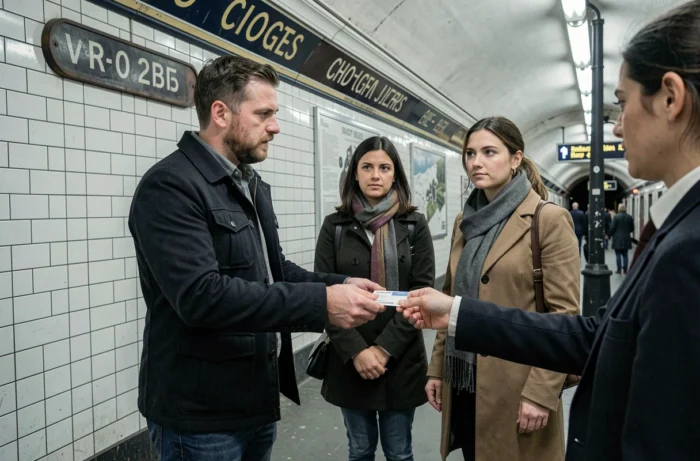
Article 78-2-1 of the Code of Criminal Procedure occupies a particular place between traditional identity checks and searches. Its regime of informing the prosecutor, without genuine prior authorization, leaves a margin of discretion to law enforcement that can vary according to local practices. For anyone confronted with this type of check in a professional setting, precise knowledge of the legal scope of the operation remains the first lever for protecting their rights.