
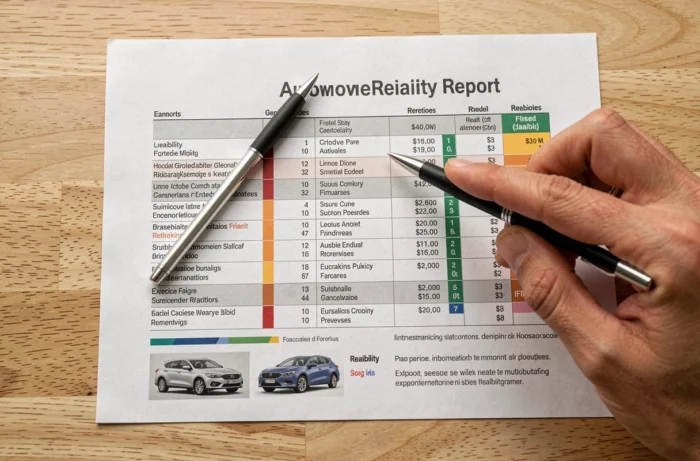
A reliability sheet from LPDD Conseil is not read like a simple score table. Its structure combines aggregated data on engines, recurring failures, and a verdict by version, which implies knowing where to focus your attention based on the type of vehicle targeted and its year of registration.
Electronics and ADAS on vehicle sheets post-2018
The reliability sheets covering models marketed after 2018 deserve a distinct reading grid. In these generations, driving aids (ADAS) and onboard electronics generate specific failures: parking sensors, adaptive cruise control radars, rearview cameras, faulty software updates. These defects do not appear in the engine or gearbox sections.
We recommend separating the reading of the mechanical and electronic sections as soon as the model studied comes with an ADAS package as standard. A correct engine score can mask fragile electronics that immobilize the vehicle just as surely as a timing belt failure.
Before relying on the overall score, check if the sheet mentions manufacturer recalls related to these systems. On some recent hybrid models, field feedback reports sensor malfunctions that only appear after several tens of thousands of kilometers. Cross-referencing the sheet with ongoing recall campaigns allows you to assess whether the problem has been fixed or persists in the current fleet.
Knowing how to read an LPDD Conseil reliability sheet means not stopping at the star rating, but digging into the detailed sections line by line.

Engine score out of 5: what the LPDD Conseil sheet really measures
Each engine receives a score out of 5 that synthesizes the mechanical reliability observed in the fleet. This score does not reflect performance levels or driving pleasure. It aggregates the frequency of recurring failures, the severity of observed defects, and the durability of main components (engine block, injection, turbo, gearbox).
A score of 3/5 does not mean a mediocre engine, but an engine that has identified and documented weaknesses. We observe that many buyers too quickly eliminate an engine rated 3, while the recorded defect is sometimes minor or already corrected by a manufacturer recall.
Conversely, a 4/5 may hide a point of caution regarding an expensive part. Always read the list of failures associated with the score, not just the number. The relationship between the cost of the typical failure and the annual maintenance budget of the model provides much more usable information than the raw score.
Recurring failures and preferred version
The “recurring failures” section lists the defects observed in order of frequency. The first lines correspond to the most common problems in the fleet. Focus your attention on the first three items: these are the ones you are most likely to encounter.
- Check if the failure concerns a classic wear part (clutch, flywheel) or a design defect (EGR valve, piezoelectric injector). The latter weighs more heavily on the purchase decision.
- Look for the mention of a manufacturer recall associated with the failure. If the recall exists and the desired vehicle has not benefited from it, you have a concrete negotiation lever.
- Note the average mileage at which the defect appears. A recurring turbo problem starting at 120,000 km has a different impact depending on whether you buy at 80,000 or 110,000 km.
The “preferred version” verdict at the end of the sheet summarizes the engine that LPDD Conseil deems to offer the best reliability/maintenance cost ratio. This choice incorporates the availability of parts, the complexity of interventions, and the feedback from the community Les Pilotes du Dimanche.
Cross-referencing the reliability sheet with actual maintenance budget
The sheet does not replace a maintenance cost estimate. It signals risks, but the actual cost depends on the purchase mileage and the vehicle’s history. A model rated 4/5 with an incomplete maintenance book will cost more than a 3/5 that has been serviced at a dealership from the start.
We recommend creating a simple three-column table before making any decision:
- Column 1: the recurring failures listed in the sheet, classified by probability of occurrence at the purchase mileage.
- Column 2: the estimated cost of each intervention (ask your mechanic for a quote or check parts + labor rates online).
- Column 3: the presence or absence of the part/intervention in the maintenance book of the targeted vehicle.
This cross-referencing transforms the reliability sheet into a negotiation tool. If the vehicle approaches the mileage for replacing an expensive part indicated in the sheet, you can incorporate that amount into your purchase offer.
Legal compliance guarantee and reliability sheet: two complementary readings
The LPDD Conseil sheet documents the known weaknesses of a model. The legal compliance guarantee, on the other hand, protects the buyer against defects not declared by the professional seller. These two tools complement each other without substituting.
If a recurring failure listed in the sheet occurs shortly after purchase from a professional, the legal guarantee may apply when the defect existed at the time of sale without being reported. Documenting the failure with the reliability sheet strengthens your case: you demonstrate that the problem is known on this model and that the seller, as a professional, could hardly have ignored it.
Between private individuals, this guarantee does not apply. The reliability sheet then becomes your only safety net before signing. Check each failure listed during the test drive or have the vehicle inspected by an independent mechanic, specifically targeting the points noted in the sheet.
The LPDD Conseil reliability sheet takes on its full value when it serves as a field checklist, not a reading for the living room. Printed or open on your phone on the day of the visit, it guides the questions to ask the seller and the checks to perform under the hood.