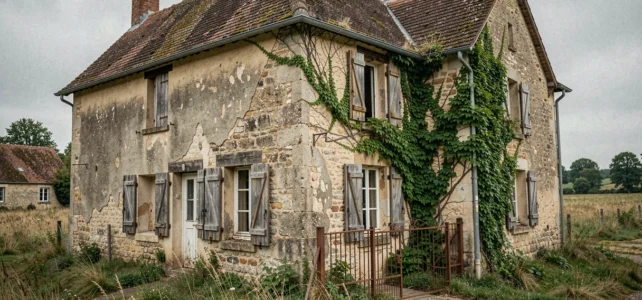
Obtaining a free abandoned house in France remains a persistent fantasy. The transfer of ownership of a vacant property always involves costs, administrative procedures, and often significant renovation work. The pertinent question in 2026 is no longer whether these houses exist, but how much their acquisition actually costs and what new rules are changing the game.
Actual Cost of Acquiring an Abandoned House: Comparative Table by Legal Route
The displayed purchase price (sometimes symbolic) represents only a fraction of the total budget. Each acquisition route generates distinct expense items that candidates systematically underestimate.
| Acquisition Route | Purchase Price | Non-negotiable Fees | Estimated Renovation Costs |
|---|---|---|---|
| Ownerless Property (municipality) | Free or symbolic | Notary fees, unpaid property taxes, mandatory diagnostics | Heavy rehabilitation (roofing, structure, utilities) |
| Vacant Inheritance (Public Domain) | Variable, often below market | Notary fees, clearing of mortgages and debts | Medium to heavy renovation |
| Public Auction Sale | Open bidding | Bidding fees, diagnostics, potential tax debts | Variable depending on the condition of the property |
| Acquisitive Prescription (30 years) | No purchase price | Judicial procedure, lawyer, land publicity fees | Ongoing maintenance during the occupation period |
None of these routes allow for acquiring a property without spending several thousand euros in ancillary fees. The renovation costs almost always exceed the actual acquisition cost, especially for properties that have been vacant for more than ten years.
To delve deeper into the legal mechanisms and specific cases recorded this year, real estate resources on EuropImmo detail the procedures community by community.
Law of April 7, 2026: What Changes for Blocked Inheritances and Vacant Properties
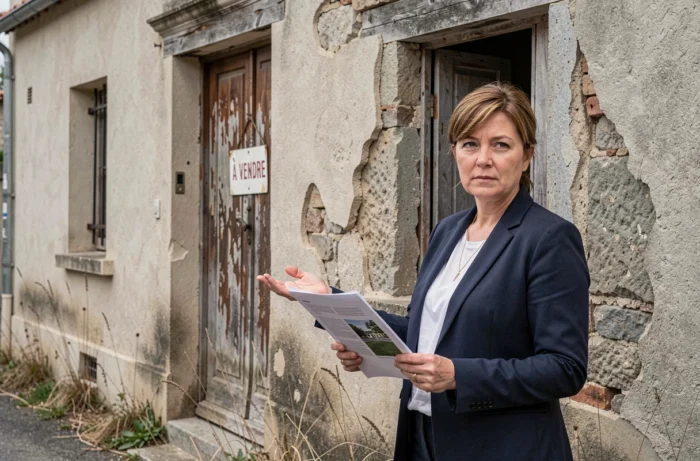
Most abandoned houses in France are so due to frozen inheritances. An unreachable heir, a family disagreement, an impasse in joint ownership: the property deteriorates while the case stagnates. The law of April 7, 2026, directly modifies this situation.
The silence of an heir is no longer sufficient to block an inheritance. After a formal notice that goes unanswered, the notary can now obtain a simplified judicial authorization that applies to all heirs, including the one blocking the procedure.
A minority co-owner can also, in certain cases, obtain from the judge the authorization to sell a jointly owned property alone when the blockage leads to deterioration of the building or accumulated charges. This provision accelerates the market entry of vacant housing that previously remained frozen for decades.
For rural municipalities, the consequence is direct: properties classified as vacant inheritances for years now have a greater chance of resulting in a real sale rather than administrative decay. The number of houses actually available for acquisition could increase in areas where communities actively use these new tools.
Ownerless Properties and Manifest Abandonment: Two Distinct Procedures for Municipalities
Municipalities have two legal frameworks to recover abandoned properties. Confusing them leads to administrative deadlocks.
- The ownerless property concerns a property whose owner is unknown or has died without an heir, and whose property taxes have remained unpaid for more than three years. The municipality can incorporate it into its domain after investigation and publication.
- The manifest abandonment targets a property whose owner is identified but allows their property to deteriorate to the point of threatening public safety or health. The procedure requires a report, a formal notice, and then a declaration of the parcel in a state of manifest abandonment by the municipal council.
- Acquisitive prescription (usucapion) remains theoretically possible after thirty years of continuous, peaceful, and public occupation, but it requires a long and costly judicial procedure, with no guarantee of success.
The Constitutional Council has validated the expropriation tool for manifest abandonment, confirming that it respects property rights while allowing communities to act. Expropriation remains a possibility, not an automatic process: the owner retains the right to appeal at every stage.
Rural Areas and Municipal Programs: Where to Look Specifically in 2026
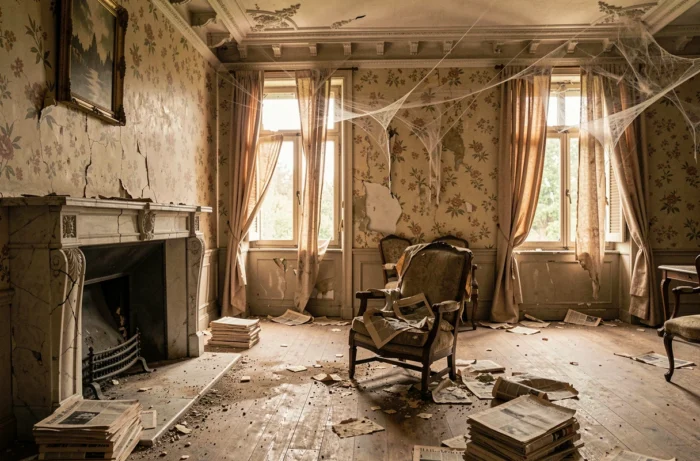
Rural revitalization programs concentrate the majority of opportunities. Some municipalities offer properties at very low prices (sometimes a symbolic euro) in exchange for a commitment to renovation and sustainable installation.
The Climate Law and the goals of zero net artificialization push communities to recycle brownfields and vacant housing rather than building on agricultural land. This regulatory pressure has multiplied local support mechanisms.
To identify these properties, three channels remain the most reliable:
- The online land registry and the land publicity service allow verification of the legal status of a parcel and the identity of the owner.
- Rural town halls sometimes maintain an inventory of vacant properties in their territory, accessible upon request.
- The state-published public auction sales list properties resulting from vacant inheritances or abandonment.
On the other hand, online platforms promising free houses rarely aggregate verified offers. Most redirect to traditional listings or properties whose legal status has not been verified.
The cost of renovation remains the real filter. A property acquired for a symbolic euro but requiring a complete roof, frame, and utilities overhaul represents a project whose total budget far exceeds that of a typical purchase in a relaxed area. The free land does not always compensate for the extent of the work, and public renovation aids (MaPrimeRénov’, local government aids) cover only part of the overall budget.
The answer to the posed question boils down to one fact: the free transfer of ownership exists legally, but the total acquisition cost never drops to zero. The law of April 7, 2026, facilitates the unlocking of inheritances, which should increase the stock of available properties. To take advantage of this, it is better to budget for renovation before searching for the property.